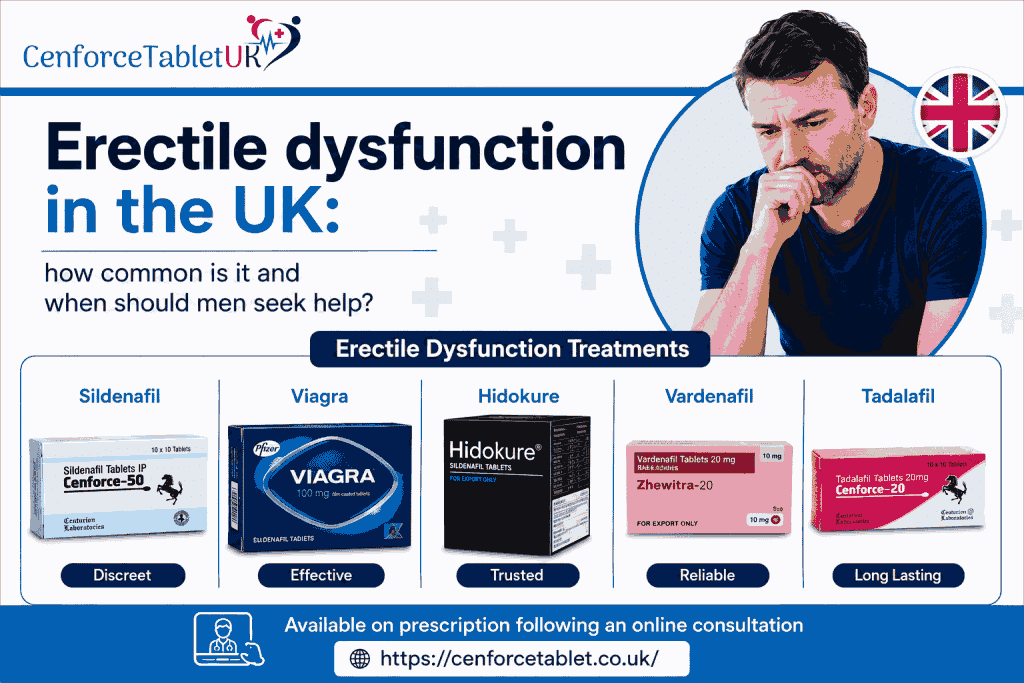
Sildenafil and tadalafil are the two most widely prescribed medications for erectile dysfunction in the UK. Both belong to the same class of drugs, known as PDE5 inhibitors, and both help improve blood flow to the penis during sexual arousal. While they share a similar mechanism of action, they differ in important ways, including how quickly they work, how long they last, and how they fit into different lifestyles and treatment plans.
How Sildenafil and Tadalafil Work
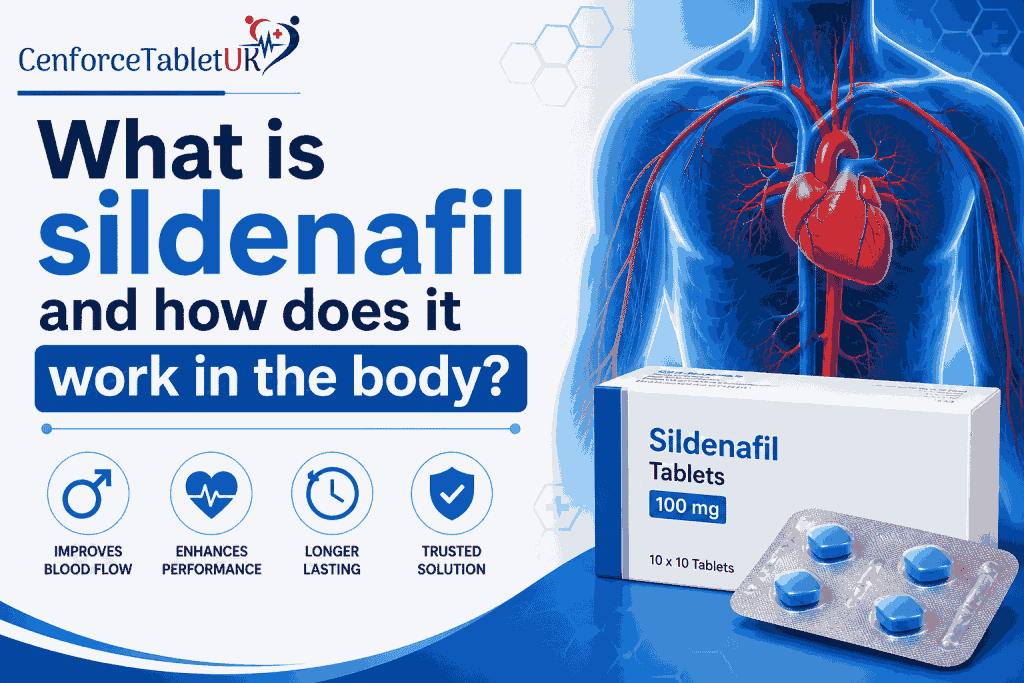
Both sildenafil and tadalafil inhibit the phosphodiesterase type 5 (PDE5) enzyme. By blocking this enzyme, they increase the levels of cyclic GMP in penile tissue, allowing blood vessels to relax and expand. This process enhances blood flow and helps men achieve and maintain an erection when sexually stimulated.
It is important to understand that neither medication causes an automatic erection. Sexual arousal is still required for either treatment to be effective. Both medications have been extensively studied and are approved for the treatment of erectile dysfunction in the UK.
Differences in Onset of Action
One of the main differences between sildenafil and tadalafil is how quickly they begin to work.
Sildenafil typically starts working within 30 to 60 minutes after taking a dose. However, consuming a high-fat meal before taking sildenafil may delay its absorption, causing the medication to take longer to become effective.
Tadalafil usually begins working within 30 minutes to 2 hours. Unlike sildenafil, tadalafil is much less affected by food intake. This allows greater flexibility, as it can be taken with or without meals without significantly impacting effectiveness.
Differences in Duration
The duration of action is often the deciding factor for many patients.
Sildenafil generally remains effective for approximately 4 to 6 hours. During this period, sexual stimulation can result in improved erectile function.
Tadalafil has a much longer half-life and can remain effective for up to 36 hours. This extended duration provides a larger window of opportunity for sexual activity and reduces the need to plan intercourse around medication timing. Because of this prolonged effect, tadalafil is often referred to as the “weekend pill.”
The long-lasting nature of tadalafil also makes it suitable for daily low-dose treatment. Daily dosing can provide continuous therapeutic levels in the body, allowing for more spontaneous sexual activity without the need for advance planning.
Side Effects Comparison
Since both medications belong to the same drug class, they share many common side effects. These may include headache, facial flushing, nasal congestion, indigestion, dizziness, and mild visual disturbances.
However, there are some differences in the side effect profiles.
Muscle aches and back pain tend to occur more frequently with tadalafil. Researchers believe this may be related to its effect on another enzyme called PDE11.
Visual disturbances, such as changes in colour perception or a blue tint to vision, are more commonly associated with sildenafil.
Indigestion may also occur slightly more often with sildenafil than with tadalafil.
Individual responses vary, and some men may tolerate one medication better than the other. A healthcare professional can help determine which option may be more suitable based on medical history and previous experiences with treatment.
Important Safety Considerations
Both sildenafil and tadalafil have the same major contraindication. Neither medication should be taken with nitrate-containing medicines used for chest pain or heart conditions. Combining PDE5 inhibitors with nitrates can cause a dangerous and potentially life-threatening drop in blood pressure.
Patients should always inform their doctor about all medications they are taking before starting treatment. This includes prescription medicines, over-the-counter products, and supplements.
Additional Medical Uses
Beyond erectile dysfunction, both medications have other approved medical uses.
Sildenafil is also prescribed for pulmonary arterial hypertension, a condition that affects blood vessels in the lungs. The dosage used for this condition differs from the dosage prescribed for erectile dysfunction.
Tadalafil is approved for pulmonary arterial hypertension as well as benign prostatic hyperplasia (BPH), a condition involving enlargement of the prostate gland. Men who experience both erectile dysfunction and urinary symptoms associated with BPH may benefit from tadalafil’s dual therapeutic effects.
Which Medication Is More Popular in the UK?
Sildenafil was introduced earlier and became available as a generic medication before tadalafil. This made it the most commonly prescribed erectile dysfunction treatment for many years.
As generic tadalafil has become widely available, the price difference between the two medications has narrowed considerably. Today, both treatments are commonly prescribed throughout the UK, and the choice often depends on individual preferences, lifestyle factors, and medical considerations rather than cost alone.
Which One Should You Choose?
Neither sildenafil nor tadalafil is universally better than the other. The most appropriate option depends on several factors, including how often sexual activity occurs, whether flexibility in timing is important, how well side effects are tolerated, and whether there are other medical conditions that may influence treatment selection.
Men who prefer a shorter acting medication for occasional use may find sildenafil suitable. Those who value spontaneity or prefer daily treatment may benefit more from tadalafil. A healthcare professional can help determine the most appropriate choice based on individual needs and medical history.
Frequently Asked Questions
Can Sildenafil and Tadalafil Be Taken Together?
No. Sildenafil and tadalafil should not be taken together. Combining the two medications does not improve effectiveness and significantly increases the risk of side effects, particularly low blood pressure.
Which Is Better for Occasional Use?
Many men use sildenafil successfully for occasional planned sexual activity because of its shorter duration. Others prefer tadalafil because its longer effectiveness reduces the need for precise timing. The best option depends on personal preference and lifestyle.
Which Medication Has Fewer Side Effects?
Both medications have similar overall side effect rates. Sildenafil is more commonly associated with visual changes and indigestion, while tadalafil is more likely to cause muscle aches and back pain. Individual tolerance varies from person to person.
Is Tadalafil More Expensive Than Sildenafil?
Historically, tadalafil was more expensive than sildenafil. However, both medications are now available in generic forms throughout the UK, and the price difference has become much smaller. Treatment decisions should be based primarily on clinical suitability rather than cost alone.
Conclusion
Sildenafil and tadalafil are both effective treatments for erectile dysfunction and have helped millions of men improve their sexual health and confidence. While they work through the same mechanism, important differences in onset, duration, food interactions, and side effect profiles can influence which option is most appropriate. Consulting a healthcare professional remains the best way to determine the right treatment based on individual health needs and lifestyle preferences.